

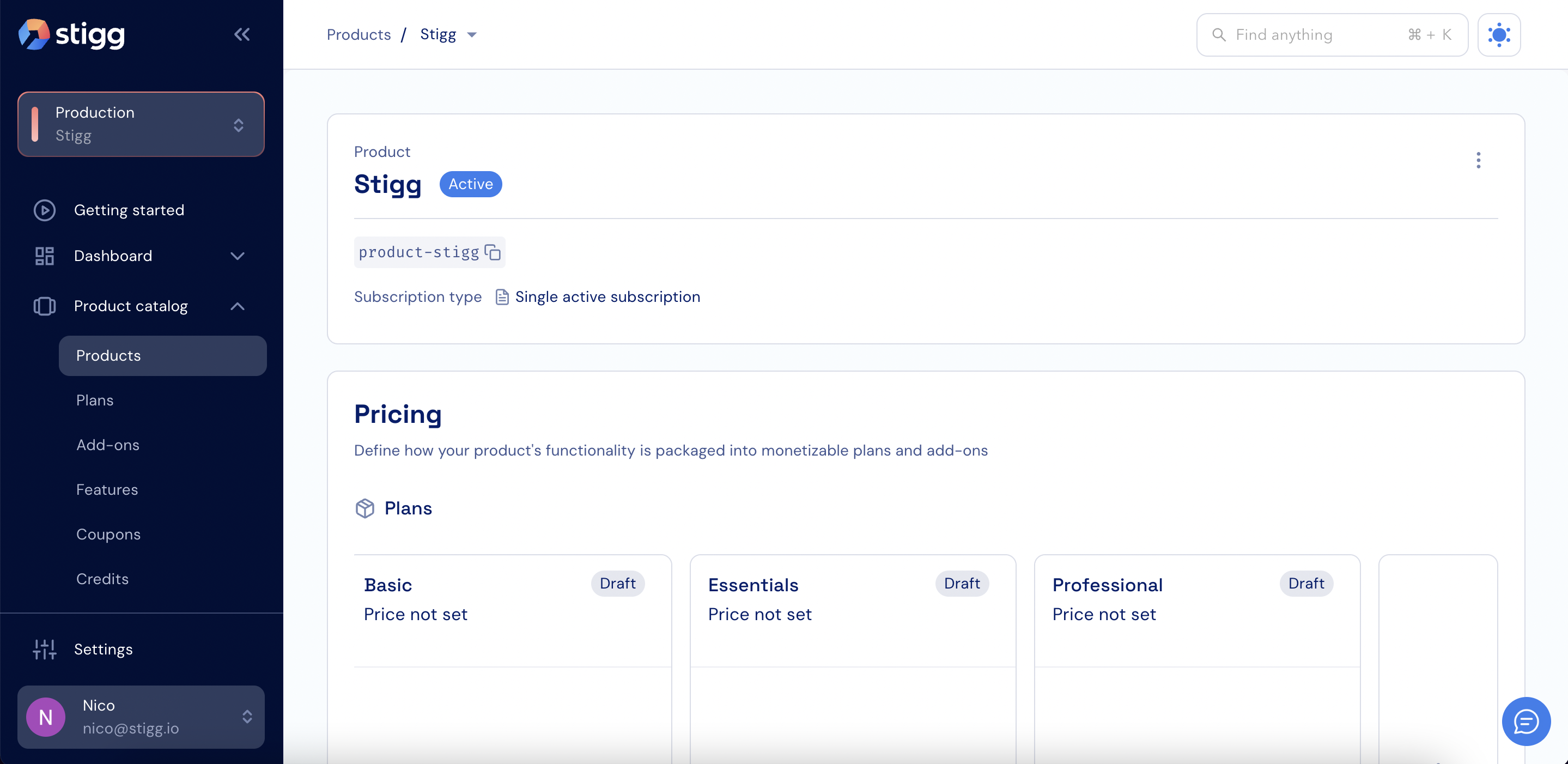
- Products represents a product family or business line that you offer to your customers - products are composed of plans and add-ons.
- Plans define how a product is packaged, priced, and made available to customers over a specific billing interval.
- Add-ons allow you to offer separately billable functionality that extends the capabilities of existing plans.
- Features are monetizable units of functionality in your product that can be configured and packaged in different ways. These configured feature rights are called entitlements, which define the specific access a customer has to each feature.
- Coupons are discount instruments that can be applied to reduce the billing amount.
- Credits are units of value in a custom currency that are granted to customers and deduct as they use metered features.
Before we begin
Stigg supports the creation of multiple environments in each account in order to support your existing product development process. Every environment is isolated from one another. Select the environment that will be used for the initial integration of Stigg with your application.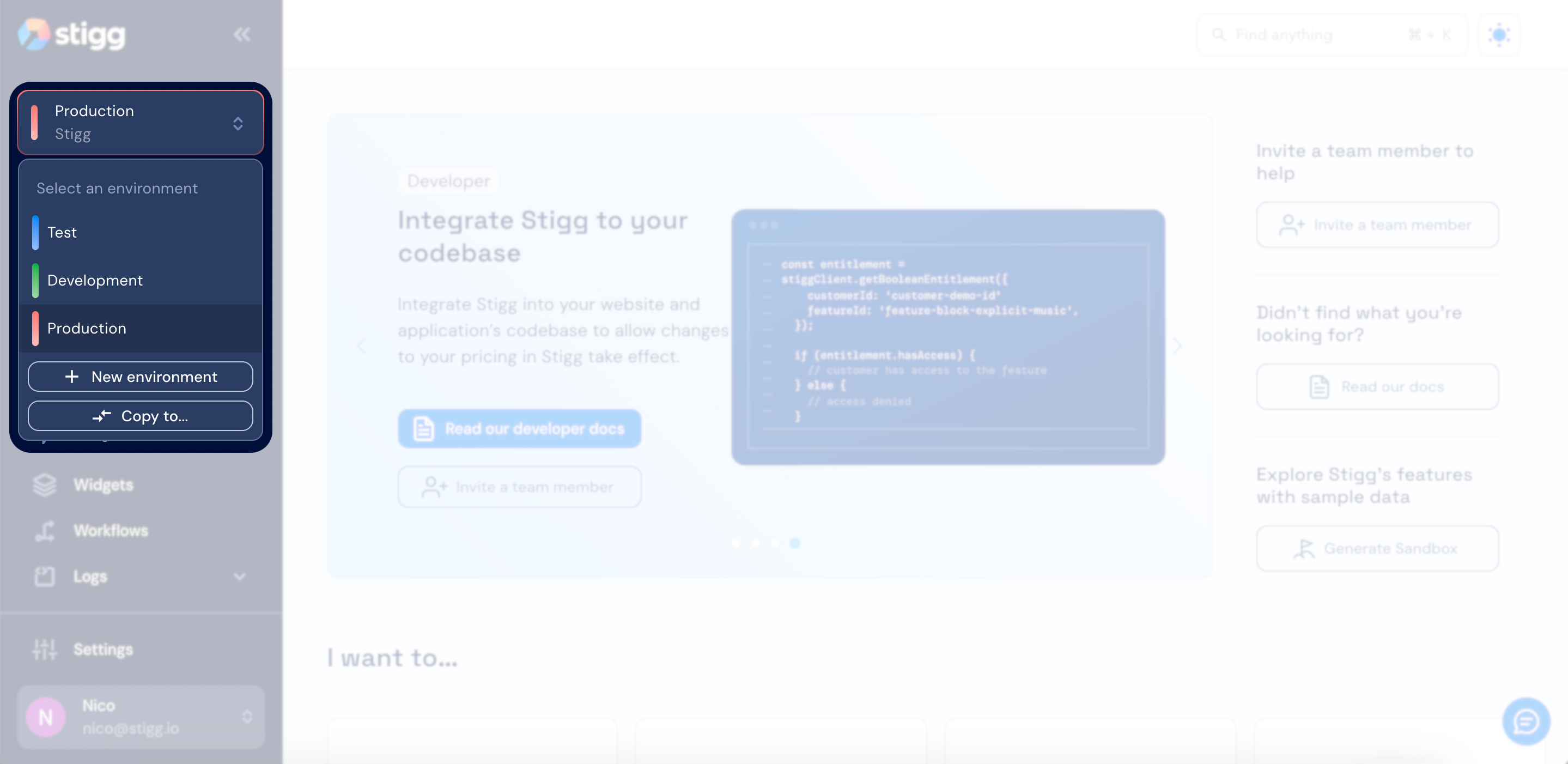
When a new environment is created, a default product for that environment will be automatically created. The product name will be the same name as the account name, for example: if your account name is Acme, an Acme product will automatically be created in every newly created environment.You can edit the name of the default product, or even remove it altogether and create a new one.