> ## Documentation Index
> Fetch the complete documentation index at: https://docs.stigg.io/llms.txt
> Use this file to discover all available pages before exploring further.
# Scalability and durability
 ## Scalability
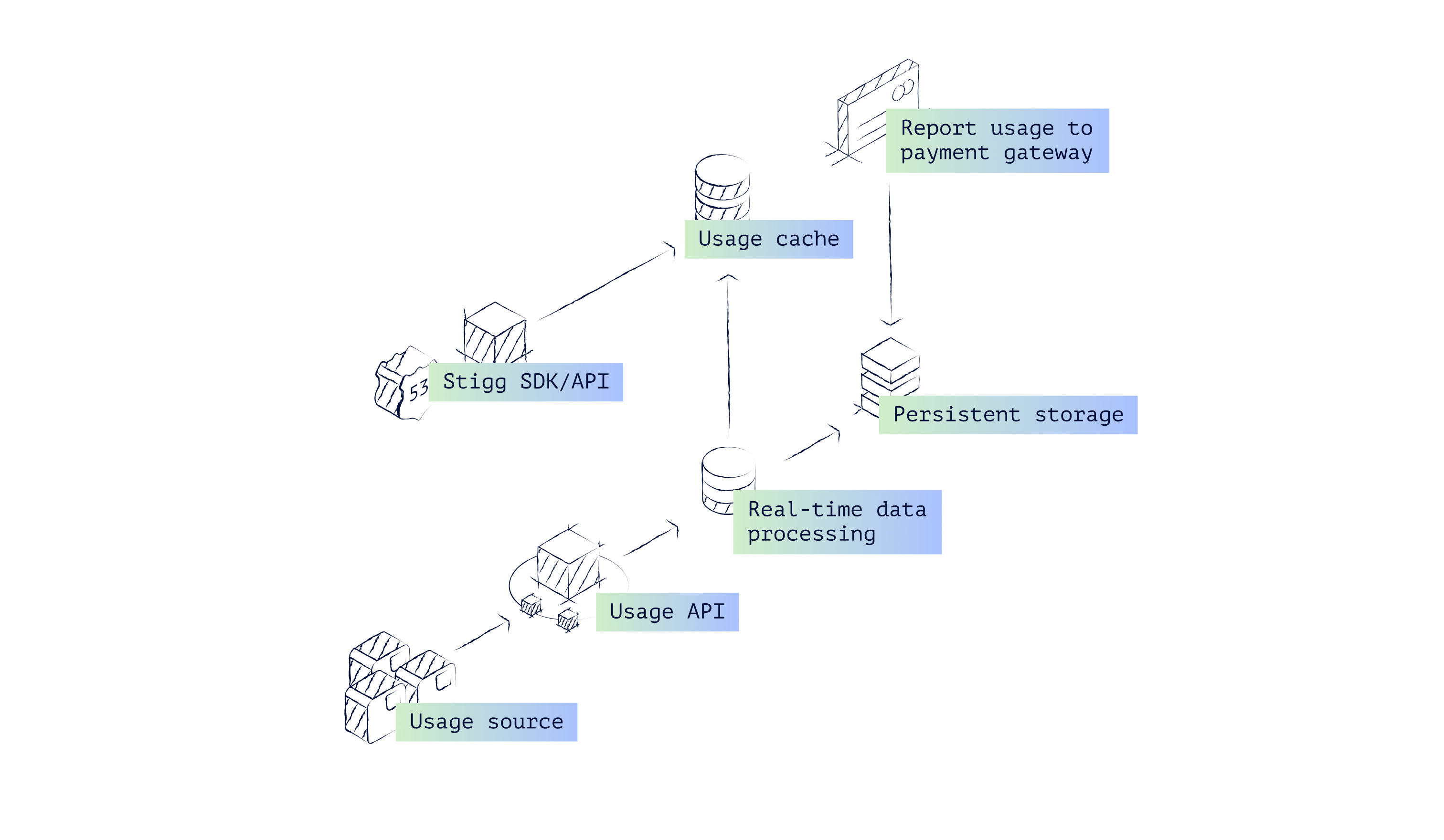
Stigg's metering and aggregation capabilities are designed from the ground up for managing high-volume real-time use cases:
* The Stigg API and SDKs allow you to report usage events in batches, with up to 1000 events per batch.
* Usage events can be reported in parallel from multiple distributed reporters without requiring any coordination.
* Built-in idempotency guarantees that duplicate events are only reported once.
* Current usage is accessed from a [distributed cache](../high-availability-and-scale/accessible-from-everywhere) and is automatically replicated across multiple regions.
* [Local caching](../high-availability-and-scale/local-caching-and-fallback-strategy) allows you to access reported usage without needing to make a call over the network.
* **Stigg Cloud** supports up to **1,000 events per second** per account.
Need to report more than 1,000 events per second? Stigg's [BYOC](/documentation/high-availability-and-scale/byoc/overview) option supports up to 1,000,000 events per second by deploying the metering service in your own cloud. [Contact us](mailto:support@stigg.io) to learn more.
## Durability and recovery
Reported usage events are stored in their original format in a highly available persistent data store with 99.999999999% of durability. This is allows you to rebuild usage data from scratch at any point in time if needed.
## Scalability
Stigg's metering and aggregation capabilities are designed from the ground up for managing high-volume real-time use cases:
* The Stigg API and SDKs allow you to report usage events in batches, with up to 1000 events per batch.
* Usage events can be reported in parallel from multiple distributed reporters without requiring any coordination.
* Built-in idempotency guarantees that duplicate events are only reported once.
* Current usage is accessed from a [distributed cache](../high-availability-and-scale/accessible-from-everywhere) and is automatically replicated across multiple regions.
* [Local caching](../high-availability-and-scale/local-caching-and-fallback-strategy) allows you to access reported usage without needing to make a call over the network.
* **Stigg Cloud** supports up to **1,000 events per second** per account.
Need to report more than 1,000 events per second? Stigg's [BYOC](/documentation/high-availability-and-scale/byoc/overview) option supports up to 1,000,000 events per second by deploying the metering service in your own cloud. [Contact us](mailto:support@stigg.io) to learn more.
## Durability and recovery
Reported usage events are stored in their original format in a highly available persistent data store with 99.999999999% of durability. This is allows you to rebuild usage data from scratch at any point in time if needed.